For nearly two decades, Google has dominated one of the most valuable parts of digital marketing: search intent.
When someone is actively looking for a product, service, answer or provider, Google has usually been the place advertisers go to reach them.
That’s why Google Ads has been so powerful: it reaches people right when they’re already searching, instead of just interrupting their day.
But search behaviour is changing. More users now use AI tools like ChatGPT to research options, compare brands and ask for recommendations. OpenAI has started running ChatGPT ads inside ChatGPT, including here in New Zealand.
This is a significant shift for search marketers. Not because ChatGPT advertising will replace Google Ads overnight, they won’t. But they could become the new channel for reaching people during the decision-making process.
Not just another display ad
It’d be easy to think of ChatGPT ads as another form of display advertising.
Display ads usually reach people while they are reading, watching or browsing. Search ads reach people when they are actively looking. Here’s where ChatGPT is different.
A user might ask:
“What is the best accounting software for a small business in New Zealand?”
Or:
“Which digital marketing agency should I use if I want to grow leads but reduce wasted ad spend?” (It’s Search Republic of course.)
Or:
“Compare Google Ads and SEO for a business with a limited budget.”
So more than keywords, you’ve got rich, contextual questions that usually include the user’s problem, location, budget, timeline, objections and decision criteria. That makes the advertising opportunity very different from a banner ad or a sponsored social post. The ad relevance and message must align with what the user is actually asking.
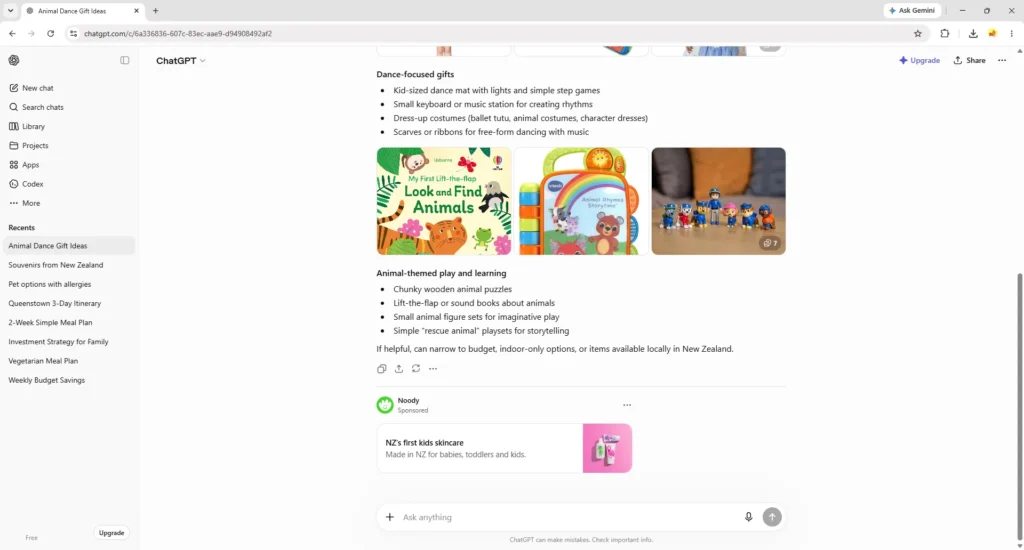
Some answers might include different products and ads. The ads are separated and clearly marked 'Sponsored'.
The interesting thing about ChatGPT advertising is the context. These ads can appear while someone is actively thinking through a decision, which makes them much closer to search than traditional display. When artificial intelligence helps users find the answer they need, your ad can be part of that conversation.
Search is becoming more fragmented
Google is still essential. It’s still one of the most important platforms for capturing demand. But the customer journey is no longer as simple as “search, click, convert”.
A potential consumer might now ask ChatGPT for recommendations, check reviews on Google, watch YouTube comparisons, read Reddit threads, visit a few websites, browse the web independently, then search for a brand name later. Different channels and separate platforms now influence the research process.
So that’s a challenge for marketers.
The final click might still come from Google Ads or organic search. But the thinking that shaped the decision may have happened somewhere else.
That’s why AI visibility matters. If ChatGPT helps people build their shortlist, understand their options or decide which brands are credible, then businesses need to think about how they show up in AI-generated answers as well as traditional search results.
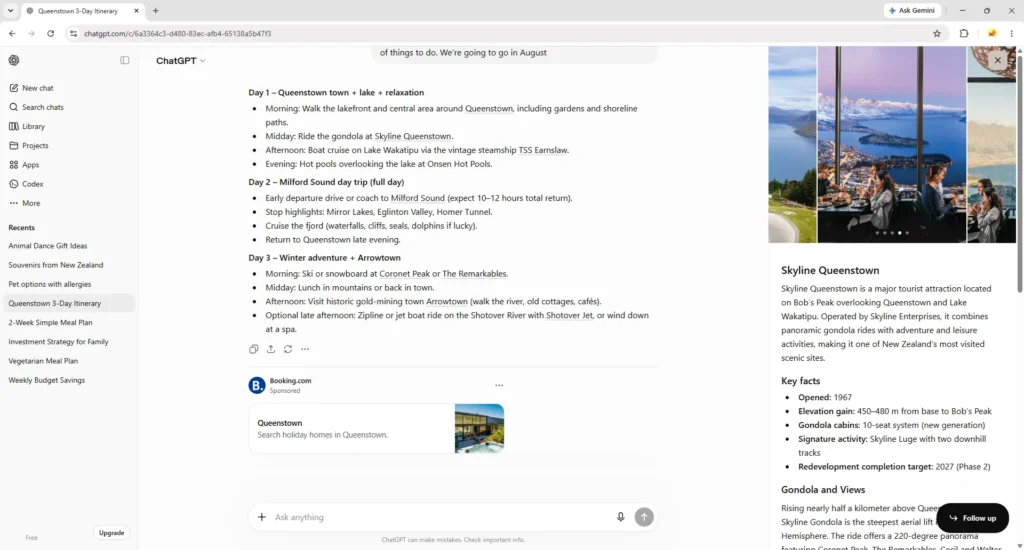
This answer shows the importance of both a brand's AI visibility (which determines what appears in the 'organic' AI answer) and ChatGPT ad strategy (showing an accommodation ad in response to a prompt asking for itinerary ideas).
Paid search is moving beyond keywords
Google Ads has always been built around keywords, even as automation and machine learning have changed how campaigns are managed.
ChatGPT ads point to a broader future: advertising based on conversational intent.
A keyword might tell us what someone searched.
A prompt can tell us why they are searching.
For example, “best CRM NZ” is useful. But a prompt like “I run a 12-person sales team in Auckland and need a CRM that integrates with Xero and is easy for non-technical staff” tells us much more.
That kind of context makes AI advertising highly valuable.
It also means marketers need to think differently. Keyword research will still matter, but prompt research will become more important. We’ll need to understand the questions people ask AI tools, the comparisons they request, and the criteria that influence their decisions.
What should advertisers do now?
Most businesses shouldn’t suddenly move large amounts of budget out of Google and into ChatGPT ads. The platform is still early, the formats, targeting, reporting and measurement are still evolving.
But advertisers should start to dip their toes in the water; there is a first-mover advantage as there are so few advertisers on ChatGPT that traffic is cheaper than on other channels.
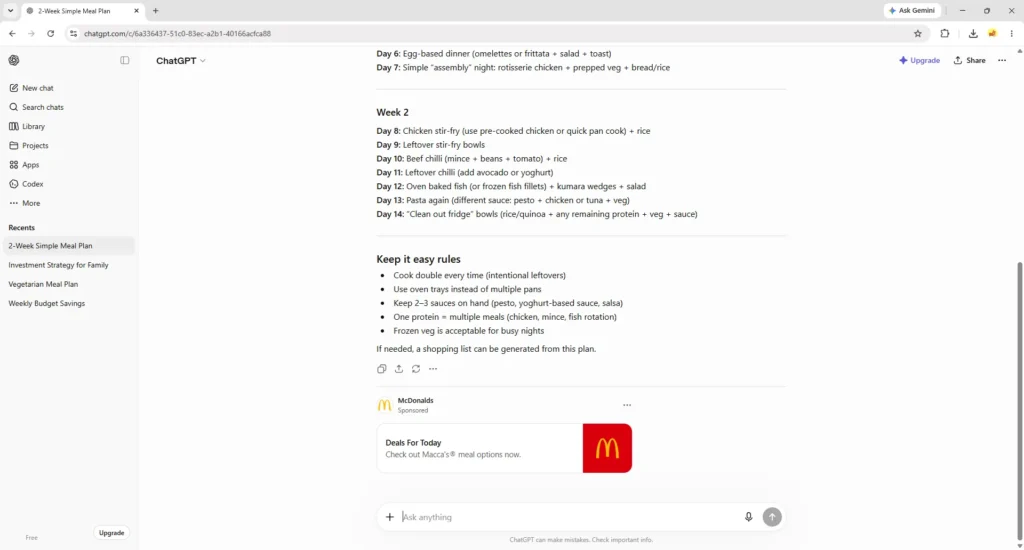
Paid plan subscribers won’t see ads. Plus, Business and Enterprise users are exempt. The ads-supported audience is the Free and Go tiers, which is still an enormous pool of users.
The trust factor
For advertisers, relevance is everything here. A ChatGPT ad needs to feel useful within the conversation it shows up in. Pushy or generic ads won’t land when people are actively asking for help. User trust is essential.
The best search advertisers understand intent. In AI, they will need to understand context. That is a higher bar, but it’s also a bigger opportunity.
Make ChatGPT Ads part of your digital marketing strategy
ChatGPT ads won’t replace Google Ads, but they will expand the search landscape.
People won’t just search through search engines, but through conversations, AI tools, marketplaces, video platforms, forums and review sites.
For businesses, the opportunity is to show up wherever consumers are researching and deciding. Your brands need visibility across multiple channels, not just on the web through traditional search.
Google will still be important. SEO will still be important! But AI visibility and conversational advertising are now becoming part of the same search marketing conversation.
The smart move is to ease your way in and begin to test and measure.
Search Republic is already running campaigns and we are there to help.
If you’d like a hand figuring out where to start, get in touch.