Remember when TV advertising meant buying a prime-time slot and hoping the right people were watching? For decades, that was just how brand-building worked in New Zealand. The living room was where attention lived, and traditional linear TV owned it.
That’s still true. The living room hasn’t gone anywhere! But streaming services have taken over the screen, and that changes quite a lot for Kiwi marketers.
What is Connected TV (CTV)?
Connected TV (CTV) is full-screen video advertising served within streaming content on platforms like TVNZ+, ThreeNow, Sky Sport Now, and NEON. CTV ads run before or during professionally produced programming, usually non-skippable, on a screen the viewer deliberately sat down in front of.
Connected TV devices include smart TVs, gaming consoles, Apple TV, streaming sticks, and other streaming devices. The viewing experience feels identical to traditional TV advertising. The mechanics behind it are completely different.
Instead of buying a fixed time slot, connected TV advertising lets you define your audience and reach them directly by household demographics, location, or behavioural data drawn from multiple data sources. You can monitor key performance metrics in real time and adjust targeting mid-campaign.
For business owners, this matters because wasted spend drops significantly. For digital advertising marketers, the outcome data is transparent: real-time measurement of completion rates, frequency, and reach, all without relying on panel-based estimates.
Why the living room still matters for advertisers
Not all digital impressions are equal, and I’d argue this point gets undersold.
A banner ad gets a split-second glance. A social ad competes with everything else on the screen. A mobile pre-roll gets skipped in five seconds. But someone watching a drama series or live sport on their couch has committed time. They’re relaxed, the screen is large, the audio is on, and the digital content is holding their focus.
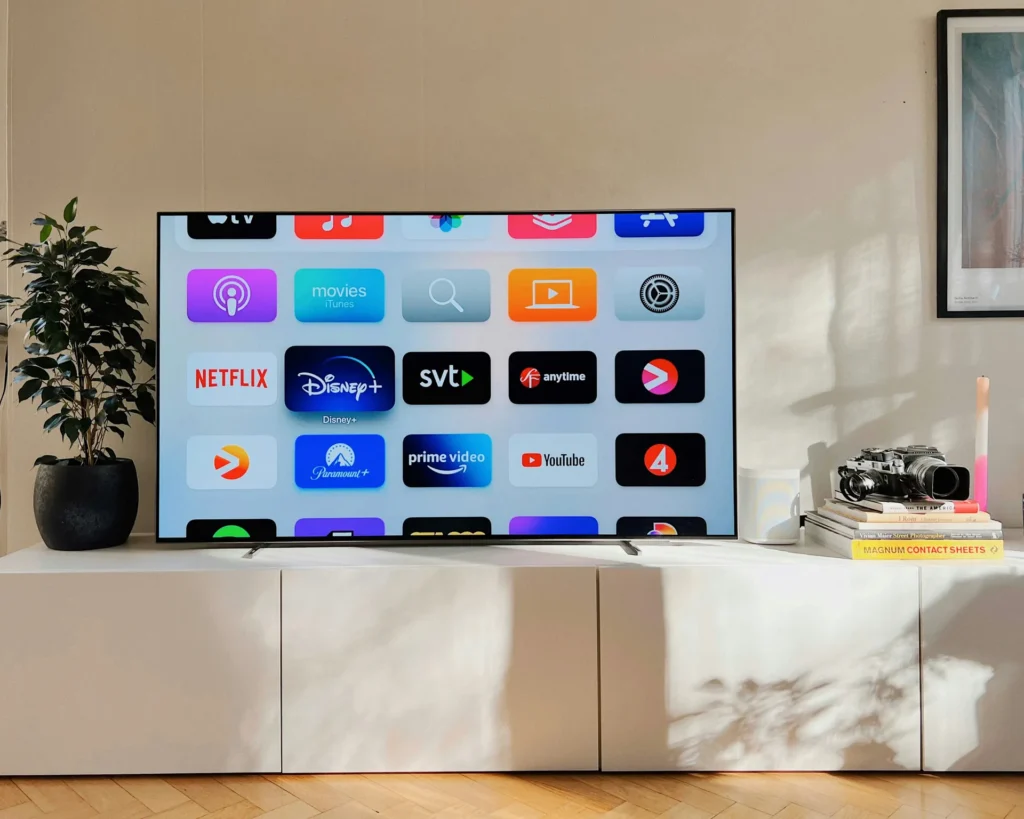
Media researchers call this “lean back” viewing, and it produces measurably better brand recall than the fragmented attention of mobile browsing. Large screen exposure also carries credibility — brands feel established when they’re on the big screen! It’s why TV ads built household names for 60 years, and why that effect transfers to streaming TV.
CTV advertising with YouTube
YouTube is now one of the most-used apps on smart TVs in New Zealand. People watch long-form interviews, documentaries, and on demand content, all directly through YouTube.
YouTube Select gives you access to premium CTV inventory within the highest-viewed video content on the platform. When those streaming TV ads run on a connected TV, they carry the same living room weight as CTV advertising, with the added reach of YouTube’s broad audience across age groups.
Combining CTV ad spend across streaming platforms with premium YouTube video ads means your brand appears in multiple places while the viewer is in the same room, on the same couch. That kind of repetition builds recall.
How premium editorial supports Connected TV advertising
Video is the core of the living room opportunity, but awareness doesn’t happen in isolation.
New Zealanders regularly read NZ Herald, Stuff, and 1News. Appearing in those environments reinforces the efforts of your CTV advertising campaigns.
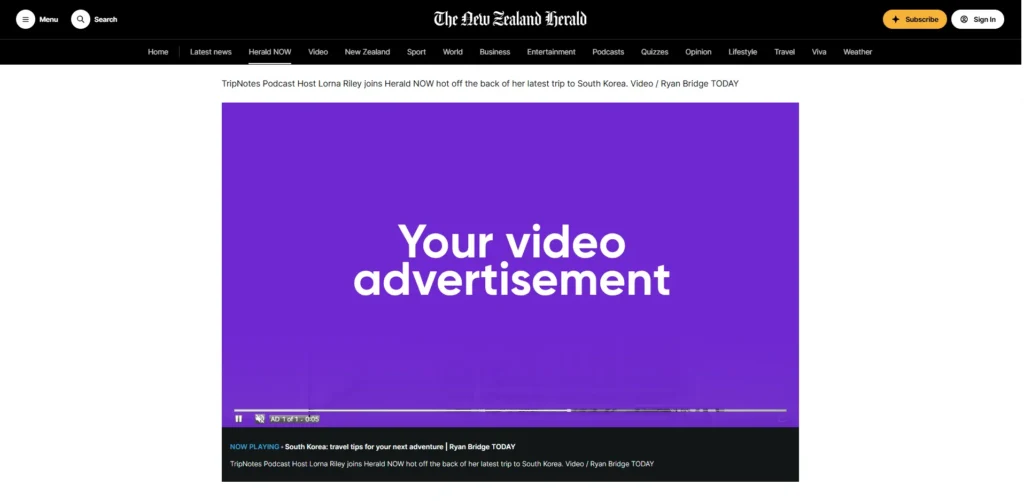
A viewer sees your brand on the television screen after work, then encounters it again the next morning in a trusted news context. That repetition across credible digital channels accelerates recognition, and signals that your brand has genuine national presence.
How much does CTV advertising cost compared to traditional TV?
Traditional TV advertising requires large upfront commitments, fixed schedules, and broad demographic assumptions. Because of that, it’s only for the big boys who have the budget.
Connected TV advertising changes the equation considerably. Any budget can play in CTV advertising, as there is no minimum daily spend on programmatic campaigns. Plus, the spend goes further because it’s more precise: you’re not paying to reach households that will never be interested.
Traditional TV ads
- Broad demographic targeting
- Fixed once campaign is booked
- Panel-based estimates for reporting
CTV campaigns
- Specific, data-informed streaming audience
- Campaigns adjustable in real time
- Transparent data delivered for reporting
Subscription video on demand platforms and media owners are also increasingly opening up interactive ad formats, giving brands more ways to engage viewers beyond a standard pre-roll.
Get started with CTV advertising
The living room is still the most powerful advertising environment available to Kiwi brands. Streaming has replaced broadcast TV shows, data has replaced guesswork, but the person on the couch is doing exactly what they’ve always done — paying attention and forming impressions of the brands they see on screen.
I believe connected TV advertising, premium YouTube, and editorial display work best together: not as isolated channels but as a coordinated presence across the environments where audiences are most engaged.
Search Republic helps NZ brands plan and run CTV programmatic advertising campaigns. Get in touch if you’d like to talk through what that looks like for your business.